

Eliminating violence against women
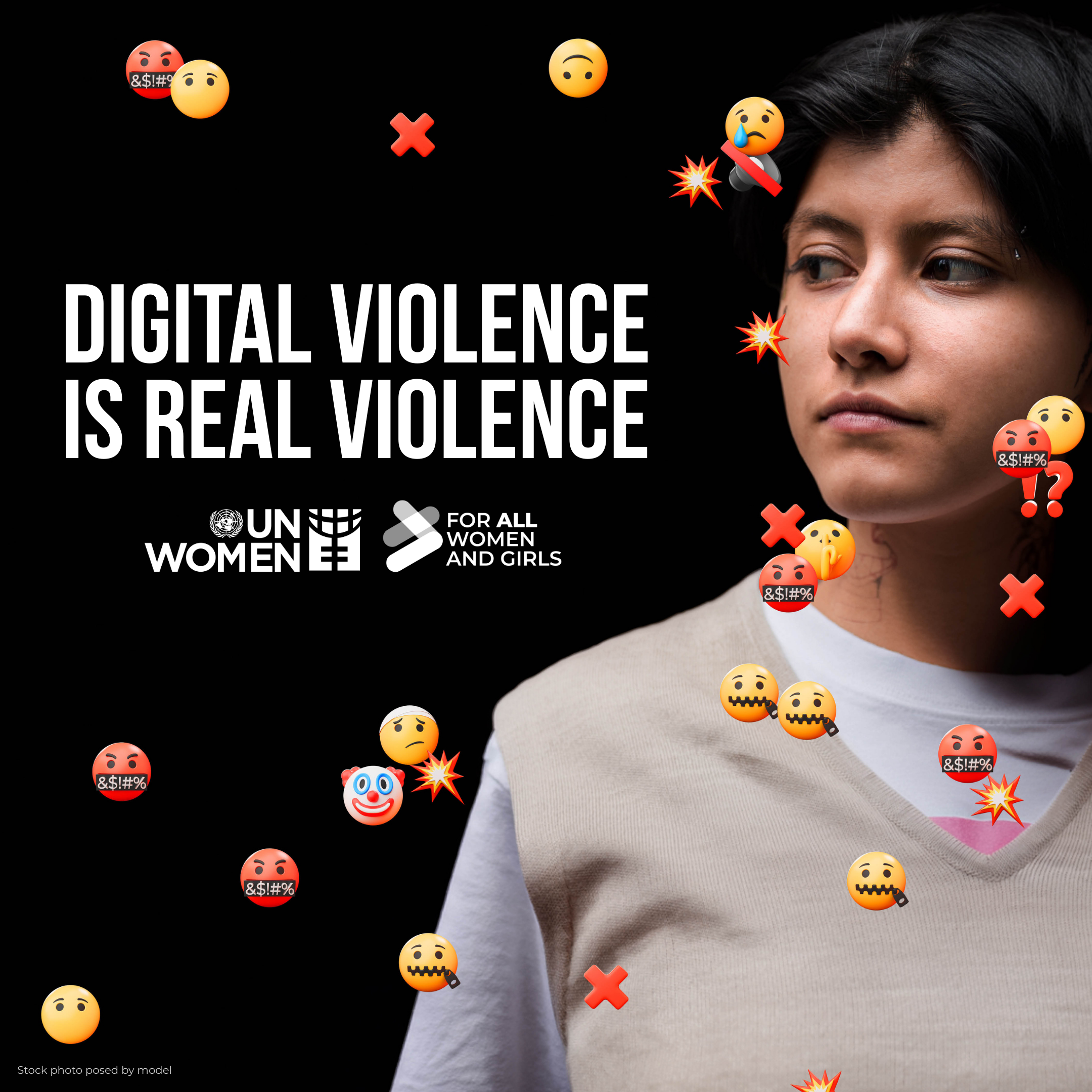
Today is the day. Yes, Novemeber 25 is the International Day for the Elimination of Violence Against Women.
The focus this year is on digital violence. According to the United Nations, 35 percent of women have experienced digital violence.
Vilence against women is not exclusively limited to digital violence. Indeed, “violence against women and girls remains one of the most prevalent and pervasive human rights violations in the world. Globally, almost one in three women have been subjected to physical and/or sexual intimate partner violence, non-partner sexual violence, or both, at least once in their life. Even more devastating is the fact that one woman or girl is killed every 10 minutes by their intimate partner or family.”
However on digital platforms, violence against women is growing. As women’s voices become more prevailant online, there is an intense pushback from some quarters seeking to silence the voices of female politicians, activsts, and journalists. “It is a form of violence on the rise due to weak technological regulation, a lack of legal recognition of this type of aggression in some countries, the impunity of digital platforms, new and fast-evolving forms of abuse using AI, movements opposing gender equality, the anonymity of perpetrators, and the limited support for digital victims,” says the UN.
So, starting today, and continuing on for the next two weeks and two days (between now and the International Human Rights Day on Dec 10), there is a campaign to end violence against women, by activating all levels of society, from governments enacting laws that penalize it, technology companies who can work to inprove the safety of platforms and remove harmful content; donors who provide funding so that feminist organizations can work to eradicate this violence, and just regular people like me, spreading the message that violence against women—even if it takes the form of online bulling—is not acceptable.
But what is digital abuse:
Again, borrowing from the UN here are some types of abuse women face online:
Image-based abuse/ non-consensual sharing of intimate images – often called revenge porn or leaked nudes.
Cyberbullying, trolling, and online threats.
Online harassment and sexual harassment.
AI-generated deepfakes such as sexually explicit images, deepfake pornography, and digitally manipulated images, videos or audio.
Hate speech and disinformation on social media platforms.
Doxxing – publishing private information.
Online stalking or surveillance/tracking to monitor someone’s activities.
Online grooming and sexual exploitation.
Catfishing and impersonation.
Misogynistic networks – e.g.manosphere, incel forums.
If this sort of abuse continues online, it can leak into real life. and the impact is even worse for women facing intersecting forms of discrimination, including race, disability, gender identity, or sexual orientation.
I am not—if you haven’t been following me long—a women. But I have built my business on celebrating and uplifting and maybe in some small way helping the healing process for women, allowing them to see themselves as beautiful and worthy of being celebrated, rather than as targets of abuse and shame and scorn. The fact that women are still targeted—often by intimate partners—breaks my heart. The fact that about 33 percent of women are abused for no other reason than that they are women makes me angry.
Over the next few days I’ll be posting either links to information about violence against women, or information directly. And if you are currently facing abuse or violence, I would encourage you to seek shelter. If sneaking messages out in the form of consultation for a boudoir shoot helps, feel free to message me, and I’ll pass it along. Tomorrow, I’ll be providing links to some of the services available on both sides of the boundary in the Peace Region.