Toxic Masculinity and the Manosphere
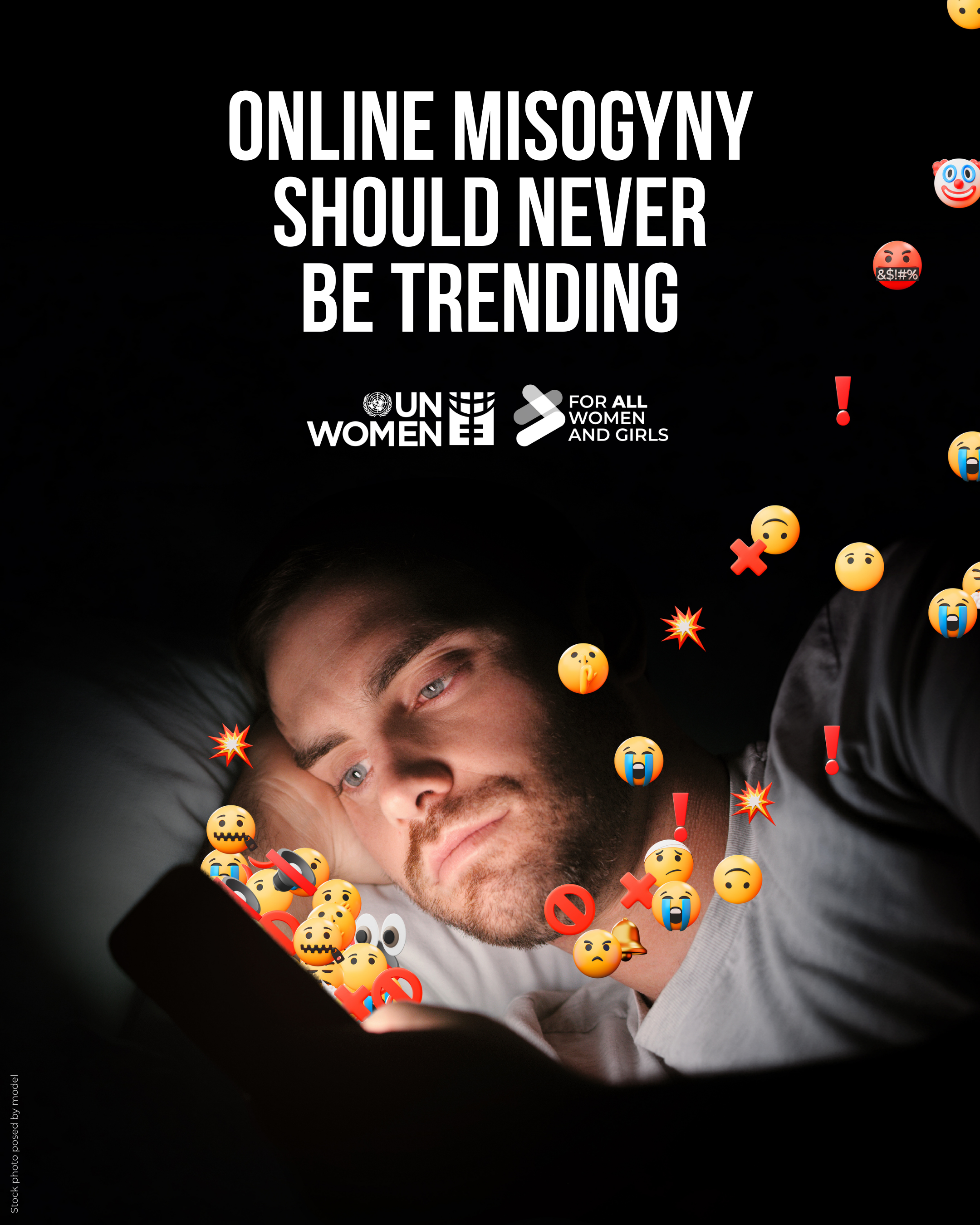
Part III in our 16 days of content in support of the UN’s UNITE Campaign to end violence against women.
There are about eight billion people on this blue marble in the sky and about 5.5 billion of them are online, most of them on social media.
We connect online. You may have discovered me over on Instagram or Facebook. Even if not, you’re reading this online (unless someone went through the trouble of printing this out to read it; if so, weird flex, but okay.)
The physical town square has become a virtual one. There’s some great things about the internet (the sum of human knowledge at your fingertips for free!!!!) and some terrible things (half the things you read are made up!!!)
It also feels like it comes with no consequences. I can say skibidytoilet, and the world doesn’t explode, or Michael Keaton doesn’t appear or whatever.
But part of that lack of consequences is the ease that we can disagree and torment and even start to bully.
Over the last number of years, men’s mental health has become popular. That’s a good things. But seeping into that conversation is harmful and even hateful advice and attitudes.
This space, often called the manosphere, is not a singular entity, but a loose network of communities and writers and people who, instead of celebrating manhood, bash womenhood.
At it’s core is a dislike of feminism and the idea that men are victims of the current social and political climate.
According to the Georgetown Institute for Women, Peace and Security, 66 percent of women globally have reported experiencing technologically facilitated, gender based violence—including instances of cyber-harassment and stalking, doxxing, and image-based sexual abuse. “Further, there are increasing reports of digital tools being used to exacerbate offline violence. For example, sexual assaults of Iranian protesters have been filmed and used to blackmail the protesters, and women in Pakistan have been killed as a result of photoshopped images being posted online.”
Nearly the same number of young men “regularly engage with masculinity influencers online” according to the Movember Foundation, many of whom promote an attitude of hate towards feminism.
And, like anything designed to promote engagement, these young men are frequently pushed into even more radical and extreme ideologies.
Is the manosphere actually round?
Hahaha, no ChatGPT, it’s not. Instead, it is this idea that there is only one definition of what it means to be a man, as well as—as mentioned above—the idea that feminism and gender equality come at the cost of men’s rights.
According to UN Women, these communities “promote the idea that emotional control, material wealth, physical appearance and dominance, especially over women, are markers of male worth. The manosphere targets male audiences on social media, podcasts, gamer communities, dating apps and just about all digital spaces.”
Like most things, people stumble into the manosphere while looking to discuss and learn about men’s issues, and while the content may seem empowering, many of these groups “promote unhealthy behaviours, like instructing boys and men to build themselves up by putting others down.”
Isolation is a common issue amongst young men, and well over half of young men feel like they are not understood.
And in seeking for community, these young people stumble into the manosphere while looking for information on fitness, or dating, or cryptocurrency, and get sucked into a philosophy that promotes the idea that they are not lonely, they are being victimized and deliberately put down, and instead of seeking to break the cycle of loneliness, chooses instead to find an “other” to fight against. And if you are feeling persecuted as a man? Well, you know the ones who are doing the persecution now, don’t you.
Because it is not a singular organization, there is no one common belief that unites the manosphere, but misogyny does rum rampant.
The groups can be lumped into four main groups, according to the UN:
Involuntary celibates (incels): believe that men are entitled to sex, and women purposefully deprive them of it. Extremist incel culture promotes rape and assault and brings together other ideologies, including racism and homophobia. Incels have been linked to acts of mass violence.
Men’s Rights Activists (MRAs): often take an academic tone to claim that feminism and women’s rights – to vote, to education, to leadership positions – have disadvantaged men. MRA preachers suggest society is gynocentric, that is, dominated by feminine interests.
Pick up artists (PUAs): teach members how to coerce women into sex and mock the idea of sexual consent.
Men Going Their Own Way (MGTOW) movement: suggests society is rigged against men – and that it is best to avoid women, and even mainstream society, altogether.
Other gendered hate speech in the manosphere (again, quoting UN women) includes:
Red pill ideology, or to be redpilled: means to wake up to a reality that the world favors women over men. In reference to the movie The Matrix, it suggests that people who disagree have taken the blue pill.
AWALT: “All women are like that,” used to stereotype women.
Femoids or FHOs: “female humanoid organism” is an insulting term meant to suggest women are not only less than men, but less than human.
Hypergamous: used derogatorily to refer to women being obsessed with marrying “up” with men who are physically attractive and financially successful.
Many women, in an attempt to be sympathetic and understanding, frequently fall into the trap of promoting some of these harmful ideologies. Again, men’s mental and physical health? Are as important as women’s. But so much of the content online seems to have been poisoned by the manosphere.